The hidden risks of using consumer headphones in the workplace
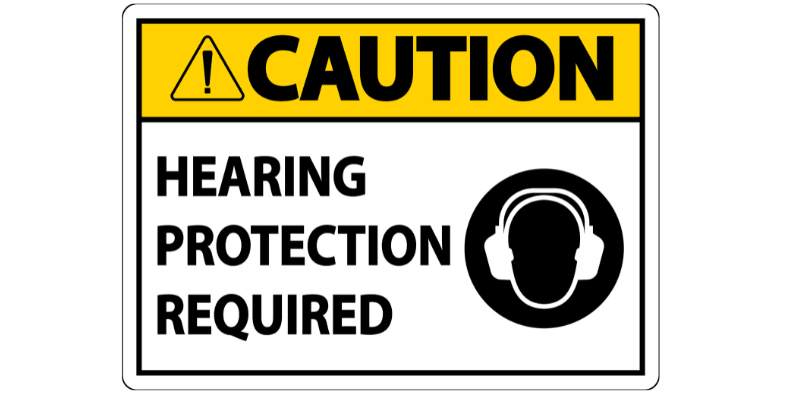
Earbuds and headphones have become a common part of everyday life, including in many workplaces. But can they double as hearing protection in Ontario workplaces? The simple answer is no.xx
“Consumer-grade active noise-cancelling (ANC) headphones and earbuds are not designed to protect against noise-induced hearing loss and do not meet the requirements of Ontario Noise Regulation 381/15,” notes Scott McLachlin, WSPS Specialist Consultant, Industrial Hygiene. “Understanding their limitations helps employers explain why these devices are not a safe choice for industrial environments.”
Where active noise-cancelling headphones fall short
Unlike certified hearing protection, consumer electronic headphones lack the design, testing, and safety features required in a noisy industrial environment.
- No certified Noise Reduction Rating (NRR). Consumer ANC headphones do not carry an NRR. Without it, employers cannot verify if noise will be reduced to regulatory limits (below 85 dBA).
- Masks safety signals. By reducing background noise, ANC headphones can also make alarms, warnings, sirens, and other critical safety cues harder to hear. Certified and properly assessed hearing protection lowers hazardous noise while preserving essential communication.
- Inability to block impact noise. While effective against steady hums (e.g., generators, HVAC systems), ANC headphones cannot block impact noise (e.g., punch presses, stamping machines or sledgehammers) due to a processing lag in the electronics. “Impact noise hits the ear before the headphones can react, resulting in increased risk of noise-induced hearing loss,” warns Scott.
- Excessive volume. Consumer ANC headphones can connect to audio sources such as music and podcasts. As workplace noise increases, workers may turn up the volume to hear their audio over the background noise. This creates a double hazard: exposure to industrial noise plus damaging sound levels delivered directly into the ear canal.
A safer option: Active Noise Reduction
While consumer ANC headphones are unsuitable for industrial use, certified Active Noise Reduction (ANR) hearing protection offers a compliant electronic alternative for employers. “A few specially designed active noise reduction (ANR) ear plugs and earmuffs (e.g. 3M PIC-100) carry a valid NRR and meet the legal requirements of a hearing protection device,” notes Scott. “Critically, the rated protection comes solely from the passive noise reduction (the physical seal), not the electronics. This allows employers to use the NRR to verify compliance with regulatory limits.”
While ANR devices offer benefits like improved communication, low frequency reduction, and noise limiters, their high cost is hard to justify unless specific communication features are essential, notes Scott. He also points out that, “even with advanced safety features, employers must recognize the residual risk to situational awareness before using ANR devices.” These risks include distraction while listening to audio and a reduced ability to hear warning indicators or alarms. Employers should conduct a thorough risk assessment for tasks and workers using ANR to identify and mitigate all potential risks.
Beyond electronics: The Hierarchy of Controls
“The Ministry of Labour, Immigration, Training and Skills Development (MLITSD) 2026–2027 campaign focuses on using the Hierarchy of Controls to reduce noise exposure,” says Scott. “You must show you are prioritizing engineering and administrative controls before considering personal protective equipment (PPE).”
- Engineering Controls: Reduce noise at the source by isolating equipment, installing acoustic dampeners, or purchasing quieter machinery.
- Administrative Controls: Limit exposure by rotating workers, scheduling loud tasks during low-occupancy times, and increasing distance from noise sources.
- PPE: Use only when other controls fail. Employers must ensure compliance by selecting devices with an adequate NRR, confirming a proper fit or conducting fit testing (as a best practice), and training workers on proper use.
How WSPS can help
Resources
- MLITSD noise inspections underway: What employers need to know (article)
- Do noise-cancelling earbuds make the cut for hearing protection? (guide)
- Noise-induced hearing loss is preventable (article)
- Teleworking: 7 ways to reduce noise and improve well-being (article)
- Protect workers from chemical-related hearing loss with these 4 best practices (article)
- Why we need to be more noise aware (article)
- Avoid Noise (video)
DIY Workshop with WSPS: How to Build a Hearing Loss Prevention Program
This no-cost interactive virtual event offers a hands-on experience to build your own Hearing Loss Prevention Program to prevent Noise-Induced Hearing Loss. Sessions run November 3, 2026 and February 24, 2027. Register today!
Live Webinars - Safety Connections
- MLITSD 2026-2027 Noise Campaign, webinar (co-hosted with MLITSD), 1.5 hours: Jan.2, 2027
- Preparing for MLITSD Occupational Hygiene Campaign - Noise - 2026-27, webinar, 1.5 hours, Sept. 15, 2026; Jan. 2, 2027.
WSPS consultants are available to conduct a noise exposure assessment in your workplace and help you develop a hearing conservation program.
Training
- Preventing Hearing Loss from Workplace Noise (1 hour, eCourse)
The information in this article is accurate as of its publication date.